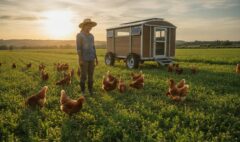
Profitable Layer Chicken Farming: 2026 Entrepreneur Guide
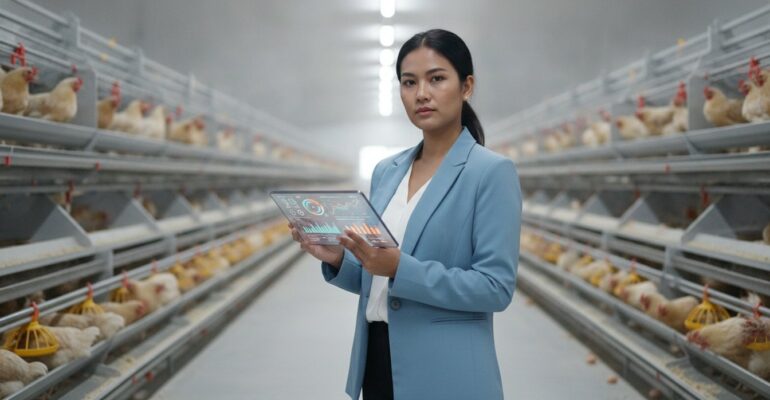

Did you know that feed costs now devour up to 70% of your total poultry revenue? It’s a brutal reality for many entrepreneurs who see their hard-earned capital vanish into feed bags while high mortality rates during the brooding stage threaten their entire flock. You’re likely feeling the pressure of a market where the margin for error has practically disappeared. Success in this industry isn’t about luck; it’s about precision. This profitable layer chicken farming guide provides the data-driven framework you need to slash expenses, stabilize daily egg production, and finally master the business of poultry.
We’ll show you how to navigate the 2026 landscape, from implementing mandatory biosecurity plans to utilizing innovative feed alternatives like Black Soldier Fly farming. You’ll gain a clear understanding of your ROI and break-even points so you can scale with confidence. We’re moving past guesswork and into a future where your farm operates as a high-performance machine. Let’s build a venture that delivers consistent results and professional-grade profits. It’s time to unlock your potential and turn your agribusiness vision into a global success story.
Key Takeaways
- Understand why surging global demand for affordable protein makes 2026 the perfect year to launch a recurring daily revenue business.
- Evaluate the ROI differences between deep litter and battery cage systems to optimize bird health and labor efficiency.
- Master feed management using this profitable layer chicken farming guide to overcome the industry’s biggest expense and protect your margins.
- Protect your investment by adopting a systematic biosecurity approach and a rigorous vaccination schedule to minimize bird mortality.
- Discover the specific record-keeping habits and management skills needed to scale your operations from a small flock to 10,000 birds.
Evaluating the Profitability: Can You Make Money with Layers in 2026?
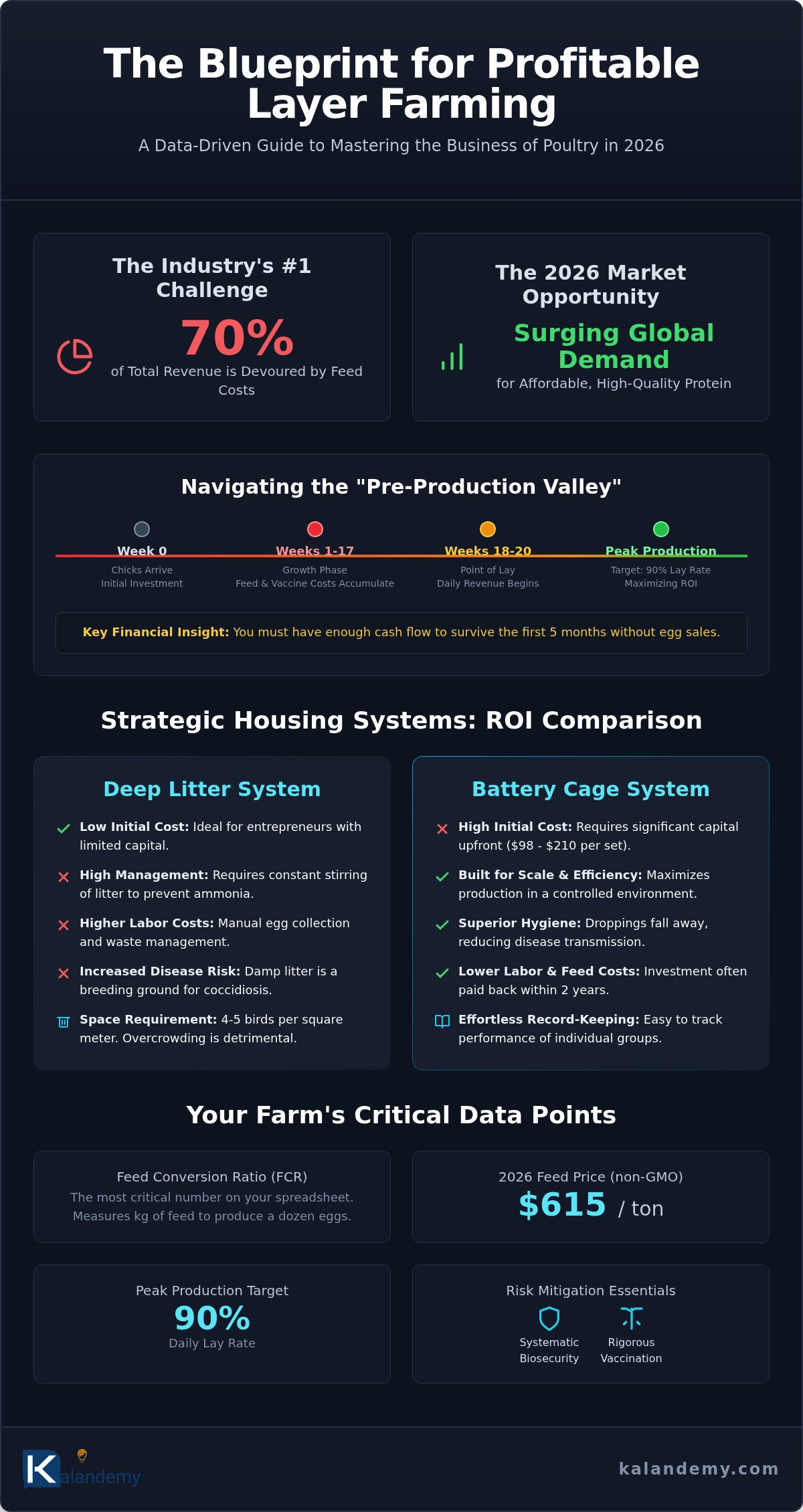
Layer farming is a high-turnover agribusiness that offers something most crops don’t: recurring daily revenue. Once your flock matures, you’re harvesting a saleable product every 24 hours. In 2026, the global demand for affordable protein has reached new heights. Eggs remain the gold standard for low-cost, high-quality nutrition. This profitable layer chicken farming guide highlights that your success rests on the “Golden Ratio.” This is the delicate balance between bird count, feed conversion, and daily egg yield. Many beginners struggle because they fail to see the gap between being a bird keeper and a farm manager. If you don’t track your data, you aren’t running a business; you’re running an expensive hobby.
The Core Economic Drivers of Egg Production
Your Feed Conversion Ratio (FCR) is the most critical number on your spreadsheet. It measures how many kilograms of feed it takes to produce a dozen eggs. With 2026 feed prices for non-GMO mash sitting around $615 per ton, efficiency isn’t optional. You also have to navigate the “pre-production valley.” This is the 18 to 20-week period where chicks grow into layers. They eat, they grow, and they require vaccines, but they don’t produce revenue. ROI in poultry is the relationship between feed cost and the egg-to-bird ratio. If your birds aren’t hitting a 90% lay rate during peak production, your profit margins will shrink fast.
Setting Realistic Expectations for Your First Year
Starting a farm requires a clear split between capital and operational expenses. Fixed costs, such as H-type battery cages which can range up to $210 per set, are your initial hurdle. Variable costs like feed and biosecurity measures are the ongoing battle. You must have enough liquidity to survive the first five months without egg sales. Cash flow is the lifeblood of your venture. If you run out of money at week 15, your entire investment is at risk. Market access is the final piece of the puzzle. Successful entrepreneurs secure their buyers before the birds arrive. Whether you’re targeting local wholesalers or high-end retailers, your sales strategy must be ready on day one. For those specifically looking to start a poultry farm in Nigeria, understanding the local feed cost pressures and market dynamics from the outset is essential to surviving this critical first year.
Strategic Housing Systems: Deep Litter vs. Battery Cages for ROI
Your choice of housing system determines your long-term ROI. It directly influences egg cleanliness, bird health, and your monthly labor bill. In tropical regions, designing for ventilation is non-negotiable. Stagnant air leads to heat stress and a sharp drop in production. Think of your infrastructure as a 10-year asset. Durable materials might cost more today, but they prevent expensive repairs in year three. This profitable layer chicken farming guide emphasizes that space requirements are the math of growth. For deep litter, aim for 4 to 5 birds per square meter. Overcrowding is a shortcut to high mortality and low productivity.
The Deep Litter System: Low Entry Cost, High Management
Entrepreneurs with limited capital often start here. It’s affordable but demands intense management. You must stir the litter regularly to prevent ammonia buildup. Damp litter is a breeding ground for coccidiosis, which can wipe out your flock. Labor costs are also higher because staff must walk the floor to collect eggs and manage waste manually. If you’re serious about mastering these operational details, the Complete Guide to Profitable Layer Chicken Farming provides the step-by-step protocols you need to manage floor-based flocks successfully.
Battery Cage Systems: Industrial Efficiency and Scaling
Battery cages are built for scale. They maximize egg production by keeping birds in a controlled environment. Record-keeping becomes effortless because you can track the performance of individual groups with precision. Hygiene is superior since droppings fall away from the birds, reducing disease transmission. In 2026, H-type battery cages can range from $176 to $210 per set; while A-type sets cost between $98 and $174. While the initial cost is higher, the reduction in feed wastage and labor often pays for the investment within two years. Be mindful of the shift toward enriched cages. Modern regulations are increasingly focused on animal welfare, so choosing cages that allow for better movement will future-proof your farm against upcoming biosecurity and welfare standards.
Mastering Feed Optimization: Cutting Costs Without Sacrificing Quality
Feed management is the single most important factor in your success. It accounts for up to 70% of your total expenses. If you don’t control this variable, your margins will evaporate. This profitable layer chicken farming guide focuses on precision nutrition across three distinct stages. Chick Mash builds the foundation. Grower Mash prepares the bird’s body for the physical strain of production. Finally, Layer Mash provides the calcium and protein needed for consistent output. Avoid the temptation of “cheap” feed. Poor nutrition results in stunted birds and brittle eggshells. It’s a false economy that costs you more in lost production than you save at the register.
Protect your investment by optimizing storage. Rodents and moisture are silent profit killers. Keep feed bags on pallets and use well-designed troughs to minimize spillage. Even a 5% waste rate can destroy your break-even point over a year. Efficiency starts at the feeder.
Alternative Feed Strategies: The Black Soldier Fly Advantage
Smart entrepreneurs are turning to innovative solutions to beat rising costs. Black Soldier Fly (BSF) larvae offer a high-protein supplement that mimics a bird’s natural diet. By integrating BSF farming, you can reduce your dependency on expensive commercial soy and fishmeal by up to 30 to 40%. This “Waste to Wealth” cycle turns organic farm scraps into high-value poultry protein. It’s a game-changer for anyone looking to maximize their ROI. Our specialized training on Waste to Wealth: Black Soldier Fly Farming provides the technical blueprint to launch this secondary venture alongside your poultry farm.
Formulating Your Own Feed: Is It Worth the Risk?
Local milling can save money, but it carries significant risks. You need a reliable supply of maize, soy, fishmeal, and essential premixes. Branded commercial feeds offer convenience and scientific balance; however, home-made batches often lack consistency. Feed consistency is more important than feed price for long-term production. A sudden change in nutritional value can cause a “molt,” stopping egg production for weeks. If you choose to mill locally, ensure your mixing ratios are exact every single time. Balance the potential savings against the risk of a production drop before you commit to mixing your own rations. For a comprehensive breakdown of proven strategies to reduce poultry feed costs naturally without compromising your flock’s health or egg output, our 2026 profitability checklist walks you through every step.
Risk Mitigation: A Systematic Approach to Biosecurity and Health
Biosecurity is your farm’s firewall. It’s the invisible shield that separates a thriving flock from a total financial loss. In 2026, with global risks like Highly Pathogenic Avian Influenza (HPAI) causing massive price volatility, your defense strategy must be airtight. Think of biosecurity as a profit-protection strategy rather than just a chore. Every bird you lose is a direct hit to your ROI. You must become a master observer. Spotting a bird that’s huddling, off-feed, or showing respiratory distress before the whole flock is infected is the difference between a minor setback and a catastrophe. Clean water is the foundation of this health. Nipple drinker systems are a game-changer because they prevent birds from defecating in their water supply, which drastically reduces the spread of intestinal parasites and bacteria.
You need a rigid vaccination schedule to survive. Marek’s, Newcastle, and Gumboro diseases are non-negotiable threats that can wipe out your entire investment in days. To implement these protocols without the expensive trial and error, download the Complete Guide to Profitable Layer Chicken Farming today.
The 5 Pillars of Farm Biosecurity
Success starts with keeping the “invisible enemy” out. Visitors are the biggest threat to your poultry farm. They carry pathogens on their shoes, clothes, and skin. Implement strict access control; nobody enters the production area without a valid reason. Your disinfection protocols must include footbaths and tire sprays at every entry point. Equipment cleaning is equally vital. Never share tools with neighboring farms without a rigorous quarantine and cleaning procedure. These simple habits create a professional environment where diseases struggle to take hold.
Brooding Management: The Critical First 4 Weeks
The first month of a chick’s life determines its lifetime egg-laying potential. Temperature control is the most important factor during this stage. Chicks can’t regulate their own body heat, so you must use reliable heat sources to prevent huddling and death. Lighting programs are also essential; they stimulate growth and prepare the birds for the hormonal shifts of the laying cycle. By week 15, you must manage stress through proper debeaking. This practice prevents cannibalism and reduces feed waste, ensuring your birds remain healthy as they transition into production. Use this profitable layer chicken farming guide to stay ahead of these critical timelines.
Scaling Your Venture: Why the Complete Guide to Profitable Layer Chicken Farming is Your Next Step
Scaling from a flock of 100 to 10,000 birds is a massive leap that demands more than just extra space. It requires a total transformation of your management systems. As your flock grows, the impact of a single mistake multiplies. A 5% mortality rate in a small flock is a nuisance; in a flock of 10,000, it’s a financial disaster. This profitable layer chicken farming guide teaches you how to maintain control through every stage of expansion. Success depends on your ability to track daily egg counts, mortality, and every cent spent on feed. Data is the only way to identify exactly where your profit is leaking. You must stop thinking like a laborer and start thinking like a CEO.
Structured training is the ultimate shortcut to this level of professionalism. One year of “trial and error” on a farm can cost you thousands in wasted feed and lost birds. A digital course is a fraction of that cost and provides a proven roadmap. Kalandemy offers practical, skill-based training specifically designed for the realities of the African market. You don’t just get information; you get a professional edge. Our platform provides certificates that strengthen your professional network and prove your expertise to investors or partners. Investing in your skills today prevents the expensive heartbreaks of tomorrow.
What You’ll Master in the Kalandemy Complete Guide
- Step-by-step video modules that walk you through setup, daily management, and high-level marketing.
- Ready-to-use templates for farm records and financial planning to keep your data organized and actionable.
- Lifetime access to a library of resources that grow alongside your business as you scale your operations.
Join a Community of Successful Digital Entrepreneurs
You don’t have to build your empire in isolation. Joining Kalandemy connects you with a network of peers to share local market insights and pricing trends. This community is a goldmine for understanding regional shifts in feed costs or egg demand. You can also unlock maximum profit by combining layer farming with other Kalandemy courses, such as our specialized training on Black Soldier Fly farming. This synergy turns your farm into a closed-loop, high-efficiency system. Don’t leave your success to chance. Secure your Complete Guide to Profitable Layer Chicken Farming today and start building your agribusiness legacy with confidence.
Your Path to Agribusiness Mastery Starts Today
You now have the framework to transform a simple poultry setup into a high-performance business. Success in 2026 isn’t about working harder; it’s about working smarter with your Feed Conversion Ratio and biosecurity protocols. We’ve explored how strategic housing and data-driven scaling can turn a small flock into a massive revenue engine. This profitable layer chicken farming guide provides the clarity you need to stop guessing and start growing.
Don’t let expensive trial and error drain your capital when a proven roadmap is within reach. Join thousands of successful entrepreneurs across Africa who are already using our practical training to secure their futures. You’ll get lifetime access to expert-led video modules and the exact templates needed for professional farm record-keeping. Get the Complete Guide to Profitable Layer Chicken Farming Now and take control of your venture. The global demand for affordable protein is surging. You have the tools to meet it. Your legacy of success begins the moment you decide to master the craft.
Frequently Asked Questions
How much capital is needed to start a layer chicken farm for 100 birds?
Starting with 100 birds requires a budget for housing, day-old chicks, and feed until the point of lay. In 2026, A-type battery cages can cost between $98 and $174 per set, while H-type sets are more expensive. You must also account for roughly 18 weeks of feed expenses before the first egg is sold. Prioritizing durable infrastructure and high-quality chicks ensures your initial investment becomes a long-term asset rather than a recurring cost.
How long does it take for layer chickens to start laying eggs?
Most modern layer breeds begin producing eggs between 18 and 20 weeks of age. This period is the “pre-production valley” where you invest in nutrition and vaccines without seeing revenue. Proper brooding management during the first four weeks is essential to ensure they hit this milestone on schedule. Consistent lighting and specific grower mash help your birds reach peak production levels faster and maintain them for longer cycles.
Which is better for layers: Battery cages or deep litter systems?
Battery cages are generally superior for ROI because they maximize hygiene and simplify record-keeping. They reduce feed wastage and keep eggs clean by separating birds from their waste. However, deep litter systems have a lower initial entry cost for entrepreneurs with limited starting capital. If you choose deep litter, you must manage litter quality strictly to prevent diseases like coccidiosis. Ultimately, cages are the better choice for scaling to thousands of birds.
Is poultry farming profitable in Nigeria and other African countries in 2026?
Yes, poultry farming remains highly profitable across Africa in 2026 due to the surging demand for affordable protein. This profitable layer chicken farming guide highlights that recurring daily revenue from eggs provides excellent cash flow for digital entrepreneurs. While feed costs are high, the ability to harvest and sell products every 24 hours makes it a high-turnover agribusiness. Success depends on mastering cost-control systems and maintaining strict biosecurity to protect your margins. Our detailed guide on how to start a poultry farm in Nigeria breaks down the specific strategies and local market realities you need to thrive in 2026.
How many eggs can one layer chicken produce in a year?
A high-performance layer chicken can produce between 300 and 320 eggs in its first year of production. This yield depends heavily on the “Golden Ratio” of nutrition, housing, and health management. As birds age, their production rate naturally declines, which is why tracking daily egg counts is vital for deciding when to cull. Maintaining a 90% lay rate during peak weeks is the standard for a professional, well-managed poultry operation.
What is the most common cause of death in layer chicken farming?
Disease outbreaks and poor brooding management are the leading causes of mortality. Highly Pathogenic Avian Influenza (HPAI) has caused significant volatility in 2026, making biosecurity your farm’s most important firewall. Other common killers include Newcastle disease and Gumboro. In the first four weeks, improper temperature control often leads to huddling and death. Implementing a systematic vaccination schedule is the only way to protect your flock from these invisible enemies.
Can I learn poultry farming online through Kalandemy?
You can absolutely master agribusiness through Kalandemy’s digital platform. Our courses are accessible anytime on any device, allowing you to learn at your own pace from anywhere in the world. We provide practical, income-improving skills and professional certificates that help you build a global network. Whether you’re a beginner or looking to scale, our expert-led modules offer a structured roadmap that is much cheaper than a year of trial and error.
How can I reduce the cost of poultry feed naturally?
The most effective way to reduce feed costs naturally is by integrating Black Soldier Fly (BSF) larvae into your birds’ diet. These larvae are a high-protein supplement that can reduce your dependency on expensive commercial soy and fishmeal by up to 40%. This “Waste to Wealth” approach turns organic farm scraps into valuable poultry protein. It’s a sustainable, cost-effective secret weapon that helps farmers protect their profitability against rising global market prices. Our field-tested 2026 profitability checklist for reducing poultry feed costs naturally gives you the complete framework to implement these strategies on your farm today.