How to Reduce Poultry Feed Costs Naturally: A 2026 Profitability Checklist

What if the secret to doubling your farm’s profit isn’t finding a cheaper supplier, but ending your dependence on commercial bags altogether? You’ve watched feed prices climb while your margins shrink; it’s exhausting to see 70% of your hard-earned revenue disappear before you even count your eggs. You aren’t alone in this struggle. In 2026, nearly half of poultry producers are feeling the squeeze of rising costs and stricter organic regulations. It’s time to take back control. You can reduce poultry feed costs naturally by up to 40% without sacrificing a single egg or compromising the health of your flock.
We’ve built a field-tested 2026 profitability checklist to help you move from a hobbyist’s struggle to a professional’s success. This isn’t about giving your birds less; it’s about feeding them smarter. We’ll explore how to unlock the “Waste to Wealth” potential of Black Soldier Fly larvae, use fermentation to boost digestibility, and source local protein that keeps your birds thriving. By the end of this guide, you’ll have a clear roadmap to turn your biggest expense into your greatest competitive advantage. Let’s start building a more resilient, profitable poultry business today.
Key Takeaways
- Master Feed Conversion Ratio (FCR) to identify exactly where your budget is leaking and eliminate waste through smarter feeder designs.
- Learn how to reduce poultry feed costs naturally by integrating Black Soldier Fly larvae as a high-protein, zero-cost supplement grown from organic waste.
- Unlock hidden nutrition through simple fermentation techniques that increase feed bioavailability and naturally lower bird consumption by up to 15%.
- Implement rotational grazing and chicken tractors to turn your land into a self-sustaining buffet of fresh insects and high-quality greens.
- Discover how to professionalize your farm management to ensure egg quality remains high while your operational expenses drop.
The Poultry Feed Crisis: Why Natural Reduction is Your Best Business Move
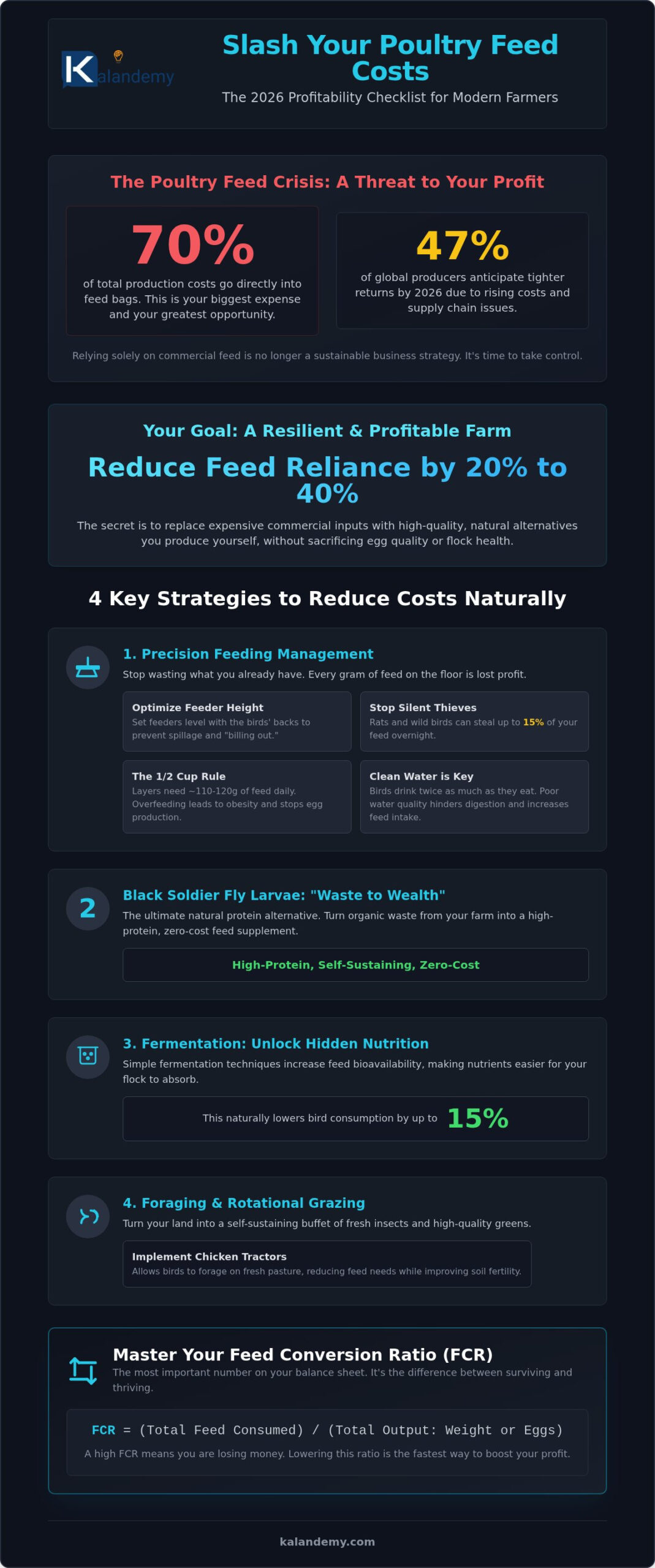
The “70% Rule” is a harsh reality for every poultry farmer. It means that nearly three quarters of your total production costs go directly into the feeders. When commercial prices spike due to global supply chain disruptions or climate-driven crop failures, your profit is the first thing to vanish. Relying solely on store-bought bags is no longer a sustainable business strategy. In 2026, roughly 47% of global producers are already anticipating tighter returns. To protect your margins, you must learn how to reduce poultry feed costs naturally by optimizing your management and diversifying your protein sources. Choosing organic alternatives isn’t just about saving money; it’s about bird longevity. Natural diets often lead to fewer metabolic issues compared to synthetic-heavy rations, keeping your flock productive for longer cycles.
Understanding the Feed Conversion Ratio (FCR)
Your Feed Conversion Ratio is the most important number on your balance sheet. It measures how many kilograms of feed your birds need to produce one kilogram of weight or a dozen eggs. To calculate it, divide the total feed consumed by the total output. A high FCR means you are literally throwing money on the floor. Most “feed leaks” happen because of poor feeder design, rodent infestations, or simple overfilling. However, low-quality nutrition also forces birds to eat more to meet their basic needs. Lowering this ratio is the fastest way to see more money in your pocket every month. It’s the difference between a farm that survives and one that thrives.
Setting Your Cost-Reduction Goals
Start by analyzing your current receipts. A realistic target for most farms is a 20% to 40% reduction in commercial feed reliance. However, don’t make the mistake of buying “cheap” feed that lacks essential amino acids. While it looks cheaper on paper, poor nutrition leads to dropped egg production and stunted growth. You need a nutritionally complete poultry feed profile to maintain your flock’s health. The secret is to reduce poultry feed costs naturally by replacing expensive soy or fishmeal with high-quality protein you produce yourself. This transition turns your farm from a victim of market prices into a self-sufficient business. Professional management is what separates a hobby from a profitable enterprise.
Precision Feeding Management: Stop Wasting What You Already Have
Stop letting your profit scratch into the dust. Every handful of feed on the coop floor is a direct hit to your bank account. You can’t build a profitable business on a leaky foundation. Even the best natural protein sources won’t save your margins if your birds are wasting what you provide. Precision management is your first line of defense. It’s about ensuring every gram of nutrition is actually consumed by your birds, not the local rat population. By refining your daily routines, you can reduce poultry feed costs naturally without changing a single ingredient in your mix.
The “1/2 cup rule” is a simple but powerful benchmark for layers. Most standard breeds require about 110 to 120 grams of feed daily. Overfeeding doesn’t just waste money; it leads to obese birds that stop laying eggs. On the flip side, underfeeding triggers a production crash. Balance is key. You should also consider your water quality. Birds drink roughly twice as much as they eat. If their water is contaminated or too warm, their digestion slows down. This means they won’t absorb nutrients efficiently, forcing them to eat more just to stay alive. Clean, cool water is the cheapest tool you have to optimize digestion.
Don’t ignore the silent thieves. Rats and wild birds can steal up to 15% of your feed overnight. This isn’t just a loss of volume; it’s a biosecurity nightmare that introduces disease to your flock. Implementing a “Zero-Waste” feeder system is a non-negotiable step for any serious farmer who wants to professionalize their operation. If you’re just getting started, you can learn poultry farming at home with structured guidance that covers biosecurity and feed management from the ground up.
Optimizing Feeder Design and Height
Spillage often happens because feeders are too low. Your birds will scratch and “bill out” the grains onto the floor where they become contaminated. Set your feeder height level with the birds’ backs. This simple adjustment forces them to reach in rather than kick out. Many successful students in our Complete Guide to Profitable Layer Chicken Farming use DIY PVC pipe feeders with 45-degree elbows. These designs prevent birds from flicking feed and keep the contents protected from the elements. Transitioning from free feeding to a scheduled morning and afternoon routine can also help you monitor intake more closely.
Storage and Quality Control
Feed is a perishable asset. Mold and humidity can destroy the nutritional value of your stock in days. Use airtight containers to prevent nutrient oxidation and stop pests from catching a scent. Always follow a first-in, first-out (FIFO) inventory system. Feeding old, rancid grain is a recipe for a sick flock and a failing business. By treating your feed like the valuable currency it is, you’ll see your overhead drop immediately.
Black Soldier Fly Larvae: The Ultimate Natural Protein Alternative
Stop letting commercial soy prices dictate your farm’s future. You have a powerful, natural protein factory waiting in your kitchen waste. Black Soldier Fly (BSF) larvae are the ultimate solution to reduce poultry feed costs naturally. These insects don’t just eat waste; they transform it into high-quality protein and fat that your birds crave. Research shows BSF larvae can replace up to 50% of the soy protein in poultry diets without losing performance. By growing your own larvae, you turn a disposal problem into a profit engine. Unlike fishmeal, which is increasingly expensive and environmentally taxing, BSF larvae are sustainable and can be produced for nearly zero cost on your own land.
Introducing larvae to your flock requires a professional approach. Don’t simply dump a bucket of larvae into the coop. Start by mixing small amounts into their regular afternoon feed. This prevents digestive upset and ensures the birds recognize the larvae as food. Once they’re accustomed to the supplement, you’ll see improved feather quality and richer yolk colors. This is the “Waste to Wealth” mindset in action. You’re no longer just a consumer of feed; you’re a producer of nutrition.
The Basics of BSF Farm Setup
Starting a BSF unit doesn’t require a laboratory. You need basic bins, a steady supply of organic waste, and a way to attract local BSF colonies. Use attractants like fermented corn bran or fruit peels to get started. The goal is to manage the life cycle from egg to prepupae. The prepupae stage is your harvest window. This is when the larvae have reached maximum nutritional value and naturally “self-harvest” by crawling out of the waste into your collection bins. In tropical environments, keeping the colony shaded and moist is vital for year-round production. A well-managed bin can process kilograms of waste daily, providing a consistent stream of protein for your flock.
Scaling BSF for Commercial Success
To move from a hobby to a business, you must understand the math behind the biology. Generally, it takes about 5kg to 10kg of organic waste to produce 1kg of high-protein larvae. This ratio makes BSF farming one of the most efficient recycling systems on earth. You can even create a secondary revenue stream by selling the BSF frass (larvae waste) as premium organic fertilizer. If you want to master this system, learn the professional setup in our Waste to Wealth: Black Soldier Fly Farming course. Proper integration means your farm becomes a closed-loop system where nothing is wasted and every input serves multiple purposes. This is how you achieve long-term profitability in a volatile market.
Fermentation and Foraging: Unlocking Hidden Nutrition
Stop viewing feed as a static expense. Fermentation turns standard grains into a probiotic powerhouse. This biological process breaks down anti-nutrients and “pre-digests” the grains, making them far more bioavailable. Your birds will actually consume 10% to 15% less volume because their bodies absorb the nutrients more efficiently. It’s a massive win for your budget. You can reduce poultry feed costs naturally by simply letting beneficial bacteria do the heavy lifting in a bucket before the feed ever reaches the coop.
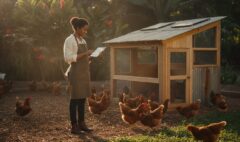
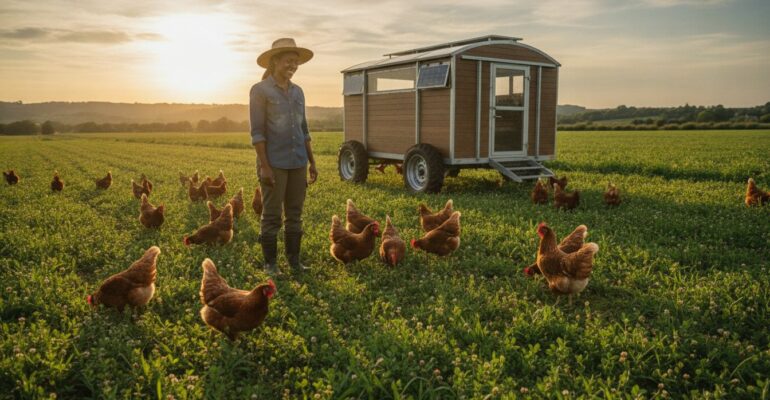
Beyond the fermentation jar, your land holds untapped wealth. Rotational grazing using “chicken tractors” provides your flock with a daily buffet of fresh clover, grass, and high-protein insects. This movement keeps the soil healthy and your birds active. If you have space for a small backyard pond, consider growing Azolla or Duckweed. These aquatic plants are nutrient-dense and grow rapidly with almost zero input. You should also look at local grain alternatives like sorghum or millet. Even cassava peels are excellent energy sources, provided they are properly dried or processed to ensure safety.
How to Ferment Poultry Feed Safely
Mastering fermentation is about consistency and observation. Follow these three steps to professionalize your “wet feed” system:
- Step 1: Place your whole grains or mash in a clean bucket. Cover them completely with chlorine-free water. Ensure there is at least two inches of water above the grain line to prevent mold.
- Step 2: Cover the bucket loosely. Monitor the mixture for two to four days. You are looking for active bubbling and a pleasant, sweet-sour smell similar to sourdough.
- Step 3: Transition your birds slowly. Start by mixing small amounts of the fermented mash with their dry feed. This allows their gut flora to adjust and prevents diarrhea.
Maximizing Foraging and Local Scraps
Think like a business owner and build local partnerships. Reach out to local restaurants or juice bars for their organic fruit and vegetable pulp. This is high-quality fiber that most businesses pay to throw away. Another powerful strategy is the “Compost Pile” method. By letting your chickens work your active compost, they gain access to a constant supply of worms and larvae while helping you turn the pile. This is a double victory for your farm’s efficiency.
However, you must stay vigilant about safety. Not all scraps are healthy. Never feed your birds avocado, chocolate, or highly salty foods, as these can be toxic. To master these sustainable systems and turn your farm into a high-growth business, explore our Complete Guide to Profitable Layer Chicken Farming. Professional knowledge is the most valuable tool in your kit to reduce poultry feed costs naturally while scaling your production.
Transitioning Your Farm: From Expensive Inputs to Sustainable Growth
Scaling a farm requires more than just hard work; it requires a strategic shift in how you view your resources. When you successfully reduce poultry feed costs naturally, you aren’t just saving pennies. You’re creating a capital surplus that can be reinvested into flock expansion, automated watering systems, or improved biosecurity housing. This is the exact moment a struggling farm becomes a resilient business. In a market where 47% of producers expect tighter returns, your ability to control inputs is your greatest competitive advantage. By moving away from total dependence on commercial suppliers, you build a buffer against the price spikes that often cripple traditional operations.
Your reputation as a producer depends on the quality of your output. As you integrate BSF larvae and fermented grains, you must monitor your eggs with a professional eye. Shell thickness and yolk color are the primary indicators of a bird’s mineral and protein intake. A deep orange yolk isn’t just a visual preference; it’s proof of a nutrient-dense diet. To manage this transition, you need data. Start a “Feed Log” today to track exactly how much you spend versus how many eggs you collect. This log will show you the direct correlation between your new natural methods and your rising profit margins. Data is the tool that turns a hobby into a professional enterprise.
Monitoring Performance During the Transition
Don’t guess when you can measure. Tracking your Hen-Day Production (HDP) is the only way to ensure your cost-cutting measures aren’t hurting your bottom line. To calculate HDP, divide the total number of eggs collected by the number of hens in your flock. If your production drops below your baseline, it’s a signal to adjust your energy or protein levels. Combine this data with daily visual health checks. Look for vibrant red combs, smooth feathers, and high activity levels. If birds appear lethargic or start feather-pecking, they likely need more concentrated protein or grit to process their new diet. Early detection prevents a small nutritional gap from becoming a total production crash.
Next Steps for the Professional Farmer
True profitability comes from a commitment to continuous learning. Once you master these natural systems, you’ve acquired a rare and valuable skill set. You can even turn your expertise in cost-reduction into a secondary revenue stream by training or consulting for other farmers in your community. Education is the one investment that never depreciates. For those who want to build their foundation from scratch, a great starting point is to learn poultry farming at home with our 2026 beginner’s guide before advancing to full commercial-scale management. To truly dominate the market, you must master every aspect of poultry business with our Complete Guide to Profitable Layer Chicken Farming. Professional management is the bridge between owning a few birds and running a global-standard agricultural enterprise. Take the next step and secure your farm’s future today.
Take Control of Your Farm’s Future Today
Your farm’s success isn’t about luck; it’s about the systems you build. By mastering your Feed Conversion Ratio and implementing biological solutions like Black Soldier Fly larvae, you’ve already taken the first step toward total independence. You can reduce poultry feed costs naturally while actually improving the health of your birds through fermentation and precision management. This transition is the difference between a struggling hobby and a high-growth agribusiness. You now have the checklist to turn waste into wealth and soaring expenses into sustainable profit.
Join over 5,000 African entrepreneurs who are already professionalizing their operations on our platform. You’ll get lifetime access to expert-led agribusiness training designed for real-world results and global standards. Start Your Journey to Profitable Farming: Browse Kalandemy Courses. The tools for your success are ready. It’s time to put these field-tested methods into action and watch your farm thrive. Your poultry business deserves to be a source of pride and lasting prosperity.
Frequently Asked Questions
Can I really replace 100% of commercial feed with natural alternatives?
While it is possible to survive on 100% natural forage, it is not recommended for commercial production. Your birds need a precise balance of amino acids and minerals to maintain peak laying rates. Professional farmers aim for a hybrid model. Replacing 30% to 50% of commercial inputs with BSF larvae and aquatic plants is a safer path. This strategy allows you to reduce poultry feed costs naturally while ensuring your birds don’t suffer from hidden nutritional deficiencies.
Is it safe to feed my chickens maggots from a Black Soldier Fly farm?
Yes, Black Soldier Fly larvae are incredibly safe and bio-secure. Unlike common houseflies, BSF adults don’t have mouthparts and don’t transmit diseases to your flock. These larvae are a natural part of a chicken’s ancestral diet. They provide essential antimicrobial peptides that can actually boost your birds’ immunity. In a 2026 industry survey, 70% of producers rated probiotics and natural alternatives as highly effective for maintaining flock health without antibiotics.
How much money can I actually save by fermenting my poultry feed?
Fermentation can reduce your total feed consumption by 10% to 15% due to increased bioavailability. This happens because the process neutralizes phytates that normally block nutrient absorption. While individual savings vary based on your local grain prices, the reduction in waste is immediate. By making the nutrients easier to digest, you ensure your birds get more value from every gram. It’s one of the fastest ways to reduce poultry feed costs naturally without complex equipment.
Will reducing feed costs naturally affect the size or taste of the eggs?
Natural feeding often results in superior egg quality. You will likely notice a deeper orange yolk and a richer flavor due to the diverse diet. Egg size generally stays consistent as long as you maintain high protein levels through sources like BSF larvae or aquatic plants. However, if you cut protein too drastically, size will drop. Professional management ensures you keep the protein high while keeping the commercial costs low.
What are the best local grains to use as a base for DIY poultry feed in Africa?
Maize remains the standard energy base, but sorghum and millet are excellent local alternatives across many African regions. They are often more drought-resistant and affordable than imported wheat. You can also use dried cassava peels, but they must be processed correctly to remove anti-nutrients. Combining these local energy sources with home-grown protein like Azolla creates a robust, low-cost ration that survives commercial market fluctuations.
How long does it take to see the results of a new feeding system?
You will see visible changes in bird activity and feather luster within 14 to 21 days. Egg production and shell quality typically stabilize within a month of a successful transition. It’s important to monitor your “Feed Log” and Hen-Day Production closely during this window. If you see a sharp drop in output, you may need to increase the protein concentration in your natural supplements to meet the birds’ metabolic demands.
Do I need a large piece of land to implement rotational grazing for my chickens?
You don’t need a massive farm to benefit from rotational grazing. A simple “chicken tractor” or mobile coop allows you to utilize small backyard spaces or garden perimeters effectively. By moving the tractor daily, you provide fresh insects and greens while preventing the ground from becoming bare or unsanitary. This system maximizes the nutritional output of even a small piece of land, turning your yard into a functional part of your feed strategy.
What is the most common mistake farmers make when trying to reduce feed costs?
The most common mistake is sacrificing nutritional quality for a lower price tag. Many farmers buy “cheap” grain that lacks the necessary protein or calcium, which eventually causes birds to stop laying. This actually increases your costs because you’re feeding birds that aren’t producing. The goal is to replace expensive commercial protein with high-quality natural protein you grow yourself. Professional farming is about optimizing value, not just cutting expenses until the business fails.